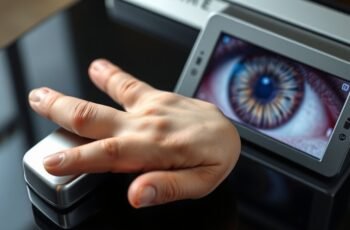
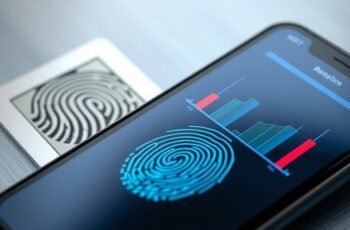
Did you know that facial recognition technology can be fooled by subtle changes in lighting or expression, while iris recognition relies on highly stable patterns that rarely change? As we compare these biometric systems, it’s clear that each offers unique strengths and vulnerabilities. Understanding how they work, their accuracy, and security concerns is essential for making informed decisions. So, what factors truly determine which technology is better suited for your needs?
Key Takeaways
- Iris recognition offers higher accuracy and lower false acceptance rates compared to facial recognition, especially in controlled environments.
- Facial recognition is faster, more contactless, and easier to implement with existing camera systems, making it suitable for high-throughput scenarios.
- Iris systems require specialized high-resolution scanners and precise eye positioning, whereas facial recognition uses standard cameras.
- Both methods face security challenges like data breaches and spoofing, but iris recognition is generally more secure due to unique iris patterns.
- Facial recognition is more vulnerable to variability in lighting, pose, and expression, affecting its reliability compared to iris recognition.
How Do Facial Recognition and Iris Recognition Work?
While both facial recognition and iris recognition are biometric methods used for identification, they operate through distinct biological features and technical processes. Facial recognition analyzes facial geometry, extracting unique landmarks such as the distance between eyes or jawline contours, then converts this data into encrypted templates for biometric authentication. Iris recognition, on the other hand, captures high-resolution images of the iris pattern, which is highly distinctive and stable over time. These images undergo complex feature extraction, generating unique codes stored securely through data encryption. Both methods rely on sophisticated algorithms to guarantee accuracy and security. While facial recognition often requires less intrusive hardware, iris recognition offers higher security due to the complexity of iris patterns. Each technique emphasizes secure data handling to prevent unauthorized access during biometric authentication.
Comparing Accuracy: Which Technology Is More Reliable?
When comparing accuracy, we focus on recognition precision levels and error rates to assess reliability. Iris recognition generally demonstrates higher precision and lower false acceptance and rejection rates than facial recognition. Analyzing these metrics helps determine which technology offers more consistent and dependable identification.
Recognition Precision Levels
How do facial recognition and iris recognition compare in regard to accuracy and reliability? Iris recognition generally offers higher recognition precision levels, thanks to the distinctiveness and stability of iris patterns. Its algorithm efficiency benefits from less variability over time, which enhances biometric scalability in diverse environments. Facial recognition accuracy, however, can fluctuate due to factors like lighting, pose, and expression, impacting its reliability. While advances have improved algorithm efficiency for facial features, these systems often require more sophisticated processing to achieve comparable precision. Overall, iris recognition provides more consistent, high-precision results, making it more reliable for security-critical applications. Facial recognition, though rapidly evolving, still faces challenges in matching iris recognition’s recognition precision levels due to inherent biometric variability.
Error Rate Comparisons
Which biometric modality demonstrates lower error rates and consequently offers greater reliability? Iris recognition consistently outperforms facial recognition in accuracy metrics, thanks to advancements in algorithm improvements. Error rates are a key factor in evaluating reliability; lower false acceptance and rejection rates indicate higher precision.
| Modality | False Acceptance Rate | False Rejection Rate |
|---|---|---|
| Facial Recognition | 1.5% | 2.0% |
| Iris Recognition | 0.1% | 0.2% |
These figures suggest iris recognition maintains considerably lower error rates, making it more dependable in high-security environments. As algorithms evolve, error rates for iris recognition continue to decline, further enhancing its reliability compared to facial recognition.
Speed and Convenience: Which Is Faster for Verification?
When evaluating verification speed, facial recognition typically processes images faster due to its reliance on existing camera systems and less invasive capture methods. Iris recognition, however, requires precise eye positioning and higher-quality imaging, which can slow down the verification process. Analyzing ease of use, facial recognition offers a more straightforward, contactless experience, making it more convenient in high-throughput environments.
Verification Speed
The speed of verification is a critical factor when comparing facial recognition and iris recognition systems, as it directly impacts user convenience and operational efficiency. Iris recognition generally offers faster biometric authentication due to its rapid image capture and high accuracy, enabling swift identity verification. Facial recognition, while increasingly optimized, can be slower in environments with variable lighting or occlusions, affecting overall speed. Key considerations include:
- Capture Time: Iris scans typically require less time due to straightforward imaging.
- Processing Speed: Iris matching algorithms often outperform facial recognition due to reduced variability.
- Environmental Factors: Facial recognition may need more complex adjustments, slowing verification.
These differences influence the suitability of each system for high-throughput security environments where rapid biometric authentication is essential.
Ease of Use
In practical applications, the ease of use for biometric verification systems hinges on both speed and user convenience. Facial recognition generally offers a superior user experience due to its contactless nature and rapid processing, enhancing accessibility features for diverse populations. Iris recognition, while highly accurate, often requires more precise positioning and specialized equipment, which can impact overall convenience. This can introduce slight delays and affect user comfort, especially in high-throughput environments. For ideal usability, systems must minimize complexity and facilitate seamless interaction. Ultimately, facial recognition’s streamlined process provides a faster, more accessible verification experience, whereas iris recognition’s precision comes at the cost of added procedural steps. Both systems must balance technical performance with user-centric design to maximize ease of use.
Security Challenges and Vulnerabilities in Both Technologies
Despite their advanced capabilities, both facial and iris recognition systems face significant security challenges rooted in their reliance on biometric data that can be compromised or manipulated. These vulnerabilities threaten data privacy and open avenues for biometric theft. Attackers can exploit weaknesses through techniques like presentation attacks or spoofing, which can deceive the systems with manipulated images or artifacts. Additionally, biometric databases are prime targets for cyberattacks, risking large-scale data breaches. The following issues highlight key vulnerabilities:
- Susceptibility to presentation attacks and spoofing
- Risks of biometric data theft during storage or transmission
- Challenges in ensuring secure, tamper-proof storage solutions
Addressing these vulnerabilities requires robust anti-spoofing measures and advanced encryption to safeguard biometric data against evolving threats.
Privacy Concerns Surrounding Facial and Iris Recognition
While advancements in facial and iris recognition have enhanced security capabilities, they also raise significant privacy concerns. The primary issue revolves around privacy implications and data protection. These technologies collect highly sensitive biometric data, increasing risks of unauthorized access or misuse. Data breaches could expose personal identifiers, leading to identity theft or surveillance. Organizations often lack transparent policies on data storage, retention, and sharing, heightening ethical concerns. The potential for mass surveillance and erosion of anonymity fuels public debate around privacy rights. To address these issues, robust encryption, strict access controls, and clear data governance are essential.
| Aspect | Concern | Mitigation Strategy |
|---|---|---|
| Data collection | Unconsented biometric data gathering | Consent frameworks, transparency |
| Storage | Risk of data breaches | Encryption, secure servers |
| Sharing | Unauthorized data sharing | Data anonymization, access controls |
| Retention | Excessive data retention periods | Defined retention policies |
| Surveillance | Mass monitoring and privacy erosion | Regulatory oversight, limits |
Ideal Use Cases for Facial Recognition Technology
We see facial recognition excelling in public security implementations, where rapid identification can enhance safety and response times. It also proves effective in access control systems, providing seamless authentication in secure environments. Additionally, automated border checks benefit from its speed and accuracy, streamlining immigration processes while maintaining security.
Public Security Implementations
How can facial recognition technology bolster public security efforts? It enhances surveillance accuracy and enables rapid identification of persons of interest in crowded environments. However, legislative challenges and cultural acceptance significantly influence deployment. These factors determine the extent of public trust and regulatory support. Key applications include:
- Real-time monitoring at border crossings for swift identification
- Surveillance in high-traffic public spaces to deter crime
- Event security management to quickly identify threats
While these implementations improve safety, they are often met with scrutiny due to privacy concerns and varying cultural attitudes toward surveillance. Addressing legislative challenges involves establishing clear policies, whereas fostering cultural acceptance requires transparency and public engagement. Balancing technological benefits with societal values is essential for effective, lawful public security use of facial recognition.
Access Control Systems
Facial recognition technology has become a valuable tool for enhancing access control systems, particularly in environments requiring high security and rapid verification. Its effectiveness depends on reliable biometric authentication, but cultural biases can influence accuracy, leading to potential disparities across diverse populations. Ideal use cases include corporate offices, data centers, and restricted areas where swift, contactless access is essential. By integrating facial recognition, organizations can reduce reliance on traditional ID cards or PINs, streamlining entry processes. However, the technology’s sensitivity to cultural biases necessitates rigorous calibration and ongoing validation to prevent false rejections or acceptances. When implemented thoughtfully, facial recognition can improve security protocols while maintaining operational efficiency, provided its limitations are acknowledged and addressed through continuous system improvements.
Automated Border Checks
Automated border checks have increasingly integrated facial recognition technology to streamline identity verification processes at international entry points. This approach enhances efficiency, reduces processing times, and minimizes human error. Cross-cultural adoption of facial recognition faces challenges related to varying legal regulations and privacy concerns across jurisdictions. Effective implementation requires compliance with legal frameworks and adaptation to diverse biometric standards.
- Facilitates rapid, contactless verification in high-traffic borders
- Necessitates adherence to international privacy laws and data protection standards
- Requires calibration for demographic and cultural differences to ensure accuracy
These factors underscore the importance of aligning technological capabilities with legal and cultural contexts, ensuring facial recognition systems remain effective and compliant in global border control applications.
When Iris Recognition Outperforms Facial Recognition
Iris recognition often outperforms facial recognition in scenarios requiring high accuracy and security, particularly when facial features are obscured or altered. Unlike facial recognition, iris patterns are highly unique and stable over time, making them less susceptible to change due to aging, cosmetics, or injuries. Cultural influences and aesthetic preferences also play a role; for instance, certain cultural practices or beauty standards may affect facial visibility, reducing facial recognition efficacy. Conversely, iris patterns remain consistent regardless of external factors. This stability enhances reliability in high-security environments, such as access control or sensitive facilities. Consequently, iris recognition serves as a more robust biometric method in contexts where external influences compromise facial recognition, ensuring precision despite variations in appearance or cultural modifications.
Cost and Implementation Considerations for Organizations
Implementing iris recognition systems entails significant upfront costs and technical considerations that organizations must carefully evaluate. A thorough cost analysis reveals expenses related to hardware, software, and integration processes. Key implementation challenges include sensor calibration, system scalability, and guaranteeing compatibility with existing security infrastructure.
- Hardware investments, such as high-resolution iris scanners
- Software development for accurate image processing
- Staff training to manage and maintain the system
These factors influence the overall budget and timeline, requiring detailed planning. Organizations must weigh the benefits of enhanced security against the financial and technical demands. Addressing these challenges proactively ensures smoother deployment and long-term operational efficiency, making cost analysis and careful planning essential for successful implementation.
Ethical Implications of Using Biometric Data
As organizations adopt biometric systems, understanding the ethical implications of collecting and using biometric data becomes increasingly important. Protecting data privacy is paramount, as biometric data is highly sensitive and irreplaceable. Mishandling such information risks breaches, identity theft, and erosion of individual rights. Ethical hacking plays a crucial role in evaluating vulnerabilities, ensuring safeguards are effective against malicious attacks. Transparency around data collection, storage, and usage policies fosters trust and mitigates ethical concerns. We must balance technological advancements with respect for privacy, establishing clear consent frameworks and limiting data access to authorized personnel. Ultimately, responsibly managing biometric data upholds ethical standards, promotes user confidence, and prevents potential abuses that could arise from unchecked data exploitation.
Future Trends and Innovations in Facial and Iris Recognition
What are the emerging trends shaping the future of facial and iris recognition technologies? We see advancements driven by enhanced accuracy, contextual intelligence, and user-centric adaptation. Especially, emotion detection is becoming integrated to analyze subtle facial cues, enriching biometric profiles with psychological insights. Simultaneously, cultural adaptation is prioritized to reduce biases and improve system inclusivity across diverse populations. These innovations include:
Emerging facial and iris recognition trends focus on emotion detection, cultural adaptation, and real-time, inclusive biometric analysis.
- Deep learning models optimizing for emotion recognition and cultural nuances
- Real-time biometric analysis for dynamic environments
- Cross-modal systems combining facial and iris data for increased reliability
Together, these trends aim to create more intuitive, culturally aware systems capable of nuanced understanding, ultimately expanding application scope while addressing ethical considerations.
Frequently Asked Questions
How Do Environmental Factors Affect Facial and Iris Recognition Accuracy?
Environmental factors, like lighting, weather, and obstructions, profoundly influence recognition accuracy. We observe that facial recognition struggles in poor lighting, while iris recognition remains relatively stable, though extreme conditions can still impact its precision.
Can Facial or Iris Recognition Systems Be Fooled by Deepfakes or Masks?
Deepfake vulnerabilities and mask deception pose serious threats to facial and iris recognition systems, but advanced algorithms continually evolve to detect such tricks, making it nearly impossible for these systems to be fooled by sophisticated deepfakes or masks.
What Legal Regulations Govern Biometric Data Collection and Storage?
We navigate strict legal regulations like GDPR and CCPA, which address privacy concerns by mandating informed consent, data encryption, and secure storage, ensuring biometric data collection and storage respect individual rights and uphold data security standards.
Are There Demographic Biases in Facial or Iris Recognition Systems?
We see that demographic biases often cloud facial and iris recognition systems, impacting demographic fairness. Algorithms can inherit biases, making it essential to refine data sets and models to guarantee equitable accuracy across diverse populations.
How Do Biometric Technologies Integrate With Existing Security Infrastructure?
We integrate biometric authentication into security infrastructure via secure data encryption, ensuring sensitive information remains protected while enabling seamless access control. This combination enhances system robustness and aligns with existing protocols for thorough, resilient security solutions.
Conclusion
As we navigate the landscape of biometric technologies, understanding their strengths and vulnerabilities is like charting a course through a complex maze. Facial recognition acts as an accessible, swift gatekeeper, while iris recognition stands as a meticulous vault, offering higher precision. Balancing these tools requires careful analysis of security needs and ethical considerations, ensuring we build a future where technology safeguards identities without compromising privacy—like a finely tuned clockwork mechanism, precise and reliable.