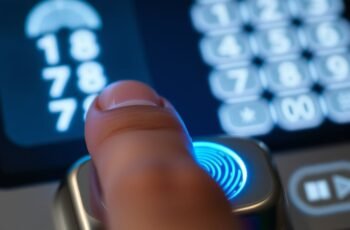
Like the classic debate between lock and key, choosing between fingerprint and facial recognition hinges on complex trade-offs. Each technology offers unique strengths and vulnerabilities that can substantially influence security, privacy, and usability. Understanding these nuances is essential for making informed decisions in deploying biometric systems. As we examine their mechanisms, reliability, and challenges, we find ourselves questioning which method truly aligns with our priorities—an inquiry that invites further exploration.
Key Takeaways
- Fingerprint recognition offers high accuracy and reliability in various conditions, while facial recognition is more affected by lighting and angles.
- Fingerprint systems are cost-effective, familiar, and secure but can be impaired by skin damage or wear.
- Facial recognition enables contactless, hygienic authentication but struggles with environmental factors and demographic biases.
- Privacy concerns are significant for both methods, with biometric data vulnerabilities requiring strong security measures.
- Application context influences choice: fingerprint for high-security needs, facial for contactless, hygienic scenarios.
How Do Fingerprint and Facial Recognition Work?
Although both fingerprint and facial recognition systems serve the purpose of biometric authentication, they operate through fundamentally different mechanisms. Fingerprint recognition relies on biometric sensors that scan the unique ridge patterns and minutiae points on a fingertip. These sensors convert physical features into digital templates, which are then stored securely. Authentication protocols compare new scans against stored templates to verify identity. Conversely, facial recognition captures 3D or 2D images using cameras, analyzing distinct facial features such as distances between key points and contours. The system creates a facial map for comparison, employing algorithms that encode these features into digital representations. Both methods depend on robust biometric sensors and sophisticated algorithms, but their underlying mechanisms differ markedly, influencing their respective processing and security frameworks.
Comparing Accuracy: Which Biometric Is More Reliable?
When evaluating the reliability of biometric systems, accuracy plays a critical role in determining which method offers superior performance. Fingerprint recognition generally exhibits high accuracy due to distinct ridge patterns that remain stable over time, resulting in low false acceptance and rejection rates. Facial recognition, while improving in accuracy with advanced algorithms, can be affected by environmental factors such as lighting, angle, or facial expressions, impacting its reliability. Biometric scalability influences overall accuracy, as systems must perform consistently across diverse populations. User convenience also impacts perceived reliability; fingerprint scanners are quick and straightforward, whereas facial recognition offers contactless operation. Both systems demonstrate strengths and limitations, but fingerprint recognition’s proven accuracy and scalability often make it more reliable in high-security contexts.
Privacy Concerns and Data Security in Biometric Systems
As biometric systems become more widespread, concerns about privacy and data security grow increasingly critical. Data privacy issues arise when biometric data is stored, as it’s inherently unique and irreplaceable. Hacking vulnerabilities pose significant risks, with potential breaches exposing sensitive biometric templates. These vulnerabilities can be exploited through various attack vectors, compromising user identities and eroding trust. Key concerns include:
Biometric data storage raises privacy risks, with hacking threats and potential identity breaches undermining trust and security.
- Unauthorized access to biometric databases
- Risks of biometric data theft and misuse
- Challenges in securing biometric templates during transmission and storage
Addressing these issues requires implementing robust encryption, multi-layered security protocols, and strict data governance policies. Ensuring data privacy and mitigating hacking vulnerabilities are essential to maintaining public confidence and safeguarding biometric information.
Practical Uses: When Is Fingerprint Better Than Facial Recognition?
Fingerprint recognition offers enhanced security in high-risk environments where precise access control is critical. It also remains reliable in poor lighting conditions, where facial features may be obscured or indistinct. These factors make fingerprint systems particularly advantageous in specific practical applications.
Enhanced Security in High-Risk Areas
Have you considered why fingerprint recognition often outperforms facial recognition in high-risk security environments? Its precision and reliability are essential where security breaches carry severe consequences. Fingerprint systems provide:
- Enhanced accuracy due to unique ridge patterns, reducing false positives.
- Lower susceptibility to spoofing, especially in high-stakes settings like government or military facilities.
- Cultural acceptance is generally higher, as fingerprinting is historically integrated into secure access, easing public compliance.
Cost implications also favor fingerprint systems in these scenarios since they can be more cost-effective over time, requiring less sophisticated infrastructure. This combination of high security, cultural familiarity, and affordability makes fingerprint recognition the preferred choice for protecting sensitive, high-risk areas where failure is not an option.
Reliable in Poor Lighting
While accuracy and cultural acceptance often favor fingerprint recognition, environmental conditions can heavily influence their effectiveness. Fingerprint sensors rely on direct contact and clear ridge detail, making them less susceptible to lighting conditions. Conversely, facial recognition performance diminishes considerably in poor lighting or adverse environmental effects, such as shadows or low illumination. In low-light environments, facial features become obscured, reducing the system’s ability to accurately match identities. Fingerprints, however, remain reliable under these conditions because they depend on physical ridges, unaffected by ambient lighting. As a result, in scenarios with challenging lighting conditions—like nighttime or poorly lit areas—fingerprint recognition provides a more consistent and dependable authentication method, ensuring security without environmental interference.
Limitations and Challenges of Fingerprint Recognition
We recognize that skin damage and wear can substantially impair the accuracy of fingerprint recognition systems, especially when ridges are obscured or altered. Additionally, privacy and security concerns arise from the potential misuse or theft of biometric data, raising questions about data protection. These factors highlight critical limitations that challenge the reliability and ethical deployment of fingerprint technology.
Skin Damage and Wear
Skin damage and wear pose considerable limitations to the reliability of fingerprint recognition systems. Over time, factors like reduced skin elasticity and constant wear and tear alter the fingerprint’s ridge patterns, complicating accurate identification. These changes can obscure minutiae points crucial for matching algorithms. Specifically,:
- Calluses, scars, or cuts distort ridge structures, reducing match accuracy.
- Aging skin diminishes elasticity, leading to less distinct fingerprint features.
- Repeated physical activity accelerates wear, erasing or blurring key ridge details.
Such physical alterations challenge the system’s ability to consistently capture high-quality fingerprint images. Consequently, the degradation caused by skin damage and wear notably impacts the robustness and reliability of fingerprint-based biometric authentication, especially in scenarios involving manual labor or prolonged use.
Privacy and Security Concerns
Have you ever considered how the unique nature of fingerprint data introduces significant privacy and security challenges? Because fingerprints are inherently personal and immutable, breaches can lead to irreversible privacy violations. Legal implications emerge around data ownership, consent, and potential misuse, especially if biometric data is stored insecurely or shared without proper safeguards. Ethical considerations also come into play, such as the risk of surveillance or profiling, raising questions about individual rights and autonomy. Unlike passwords, fingerprint data cannot be changed if compromised, making security protocols critical. Ensuring robust encryption, secure storage, and transparent policies are essential to mitigate these risks. Ultimately, addressing these privacy and security concerns requires a careful balance between technological safeguards and respecting individual rights.
Limitations and Challenges of Facial Recognition
Despite its widespread adoption, facial recognition technology faces significant limitations rooted in technical, environmental, and ethical factors. Cultural biases can skew algorithm accuracy, often leading to misidentification across diverse populations. Additionally, variations in lighting, angles, and image quality introduce environmental challenges that hinder reliable matching. Ethical dilemmas further complicate deployment, raising concerns about consent and surveillance. Key limitations include:
- Biases stemming from underrepresented demographic data
- Sensitivity to environmental conditions affecting image quality
- Ethical issues related to privacy invasion and consent
These factors highlight the ongoing struggles to develop universally accurate and ethically sound facial recognition systems. Addressing these challenges requires continuous refinement of algorithms and careful consideration of societal impacts.
Which Biometric Method Is Right for You? Factors to Consider
Choosing the most suitable biometric method depends on evaluating various factors such as accuracy, environmental robustness, user privacy, and application context. Biometric adaptability plays a pivotal role, as some methods perform better under specific conditions—facial recognition may struggle in poor lighting, while fingerprint recognition can be affected by skin conditions. User convenience also influences choice; fingerprint sensors are generally quick and straightforward, whereas facial recognition offers contactless interaction, enhancing hygiene and ease of use. Security requirements are essential, since certain methods may be more susceptible to spoofing or false acceptance. Ultimately, the best choice balances these factors, aligning with operational needs and user expectations to guarantee reliable, privacy-conscious authentication.
Frequently Asked Questions
How Do Biometric Systems Handle False Positives and Negatives?
We address false positives and negatives through threshold adjustments and multi-factor authentication, enhancing system reliability. By analyzing false detection patterns, we refine algorithms, ensuring accurate recognition and minimizing errors in biometric system performance.
What Are the Environmental Impacts on Biometric Accuracy?
Environmental conditions, like lighting or humidity, can considerably impact biometric stability and accuracy. We analyze how variables like weather, temperature, and surface contamination influence system performance, emphasizing the need for adaptive algorithms to mitigate environmental effects on biometric reliability.
Can Biometric Data Be Hacked or Spoofed?
Biometric data can be subtly manipulated through advanced techniques, raising privacy concerns. While synthetic data helps safeguard systems, sophisticated spoofing methods still pose risks, emphasizing the need for continuous technological evolution to maintain security and trust.
How Do Biometric Systems Adapt to Aging or Injuries?
We adapt biometric systems by incorporating algorithms that analyze aging pattern changes and injury-induced distortions, enhancing accuracy over time. Continuous updates and multi-modal data help maintain reliability despite physical alterations from aging or injuries.
Are There Legal Restrictions on Biometric Data Collection?
We recognize that legal privacy and data regulations impose restrictions on biometric data collection, ensuring informed consent and data protection. These regulations vary globally, requiring organizations to implement strict compliance measures for biometric systems to respect individual rights.
Conclusion
Ultimately, choosing between fingerprint and facial recognition is like selecting the right tool from a well-stocked toolbox—we must consider each method’s strengths and limitations. While fingerprints offer precision like a finely sharpened blade, facial recognition provides swift, contactless access, much like a breeze through open windows. By weighing accuracy, privacy, and practicality, we can make informed decisions that align with our security needs and ethical standards, ensuring technology serves us responsibly and efficiently.