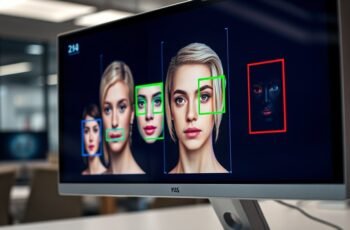
Retinal access control systems leverage sophisticated imaging technology to verify identity through unique blood vessel patterns in the retina. These systems offer high accuracy and enhanced security, making unauthorized access considerably more difficult. As organizations increasingly adopt biometric solutions, understanding the technical operation, benefits, and limitations of retinal authentication becomes essential. Exploring these aspects reveals both the potential and the challenges that shape the future of secure access management.
Key Takeaways
- Retinal access control systems use high-resolution imaging to capture unique blood vessel patterns for secure authentication.
- They convert retinal images into digital templates stored securely and compare live scans with stored data.
- These systems offer high accuracy, difficult to forge, and are less affected by environmental or skin conditions.
- Common applications include healthcare facilities and financial institutions for enhanced security.
- Challenges include privacy concerns, high hardware costs, and issues with scalability and societal acceptance.
How Do Retinal Access Control Systems Work?
Retinal access control systems operate by capturing and analyzing the unique patterns of the retina’s blood vessels, which are highly distinctive to each individual. These systems utilize specialized imaging devices to acquire high-resolution retinal images, guaranteeing accurate biometric data collection. The biometric integration process involves converting these images into digital templates stored securely within an access database. During authentication, the system compares live retinal scans against stored templates using advanced pattern recognition algorithms. User privacy remains a priority; data is encrypted and access is restricted to authorized personnel, minimizing risks of data breaches. This precise biometric method offers robust security, with retinal patterns providing a highly reliable basis for authentication. Overall, the system combines technical accuracy with strict privacy safeguards to assure effective and confidential access control.
Benefits of Retinal Biometrics Over Other Authentication Methods
Retinal biometrics offer significant advantages over other authentication methods due to their unique and highly stable biological features. This makes biometric identification highly accurate and difficult to spoof. Unlike fingerprint or facial recognition, retinal scans are less affected by environmental factors or skin conditions. Additionally, retinal data remains consistent over time, reducing false rejections. Privacy concerns are minimized because retinal images are complex and difficult to reverse-engineer, enhancing security. However, data protection remains critical to prevent misuse.
- High accuracy minimizes false positives/negatives
- Difficult to replicate or forge retinal patterns
- Less susceptible to environmental variability
- Enhanced security with stable biometric data
Key Features to Consider When Choosing a Retinal Access System
When selecting a retinal access system, we prioritize accuracy and reliability to minimize false acceptances and rejections. Security protocols must be robust to protect sensitive biometric data from breaches, while user management features should facilitate seamless enrollment, authentication, and audit trails. Evaluating these key features guarantees the system meets both operational and security requirements effectively.
Accuracy and Reliability
Ensuring high accuracy and reliability in retinal access control systems is essential for maintaining security and minimizing false acceptance or rejection rates. Biometric accuracy directly influences system dependability, ensuring authorized personnel are correctly identified while preventing unauthorized access. Factors affecting this include image quality, sensor calibration, and algorithm robustness. To optimize reliability, consider systems with advanced image processing and adaptive matching techniques. Consistent performance under various environmental conditions is vital for dependable operation. Proper system calibration and maintenance further enhance accuracy. Ultimately, selecting a system with proven biometric accuracy and dependable performance reduces security risks and operational disruptions. Achieving these standards assures that access control remains precise and trustworthy, safeguarding sensitive areas effectively.
Security Protocols
Selecting a retinal access control system requires careful evaluation of its security protocols to guarantee robust protection against unauthorized entry. Effective systems employ advanced encryption to safeguard biometric data during transmission and storage, minimizing risks of data breaches. Biometric privacy is paramount; systems must incorporate privacy-preserving algorithms that prevent misuse or unauthorized access to sensitive retinal images. Ethical concerns also demand transparent data handling policies and compliance with privacy regulations, ensuring user rights are protected. Multi-layered authentication protocols, such as liveness detection and anti-spoofing measures, reinforce security by preventing fraudulent access attempts. Ultimately, a thorough security framework balances technological robustness with respect for biometric privacy and ethical standards, delivering reliable access control without compromising user trust.
User Management Features
Effective user management features are essential for optimizing the security and functionality of retinal access control systems. These features directly influence user convenience and system customization, guaranteeing seamless operation and tailored access privileges. Robust systems should support detailed user profiles, enabling precise role assignments and access levels. Additionally, audit trails and activity logs facilitate compliance and security monitoring, while flexible credential management simplifies onboarding and updates. Multi-factor authentication options enhance security without sacrificing user experience. Finally, intuitive interfaces for administrators streamline user management tasks, reducing error potential. By prioritizing these user management features, organizations can achieve a balanced combination of security, ease of use, and adaptable system configuration. Proper implementation ensures the retinal access control system aligns with operational needs and security standards.
Industries Leading the Adoption of Retinal Security Technology
Healthcare facilities are adopting retinal security systems to enhance access control and patient data protection. Financial institutions are implementing these systems to strengthen security protocols and prevent unauthorized entry. As a result, these industries lead in integrating retinal technology to meet stringent safety and privacy requirements.
Healthcare Facilities Increasing Security
As the need for heightened security in medical environments grows, healthcare facilities are increasingly adopting retinal access control systems to safeguard sensitive areas. These systems enhance security by providing accurate, biometric verification, reducing unauthorized access. They support patient privacy by ensuring only authorized personnel can access confidential records and restricted zones. Ethical considerations, such as informed consent and data protection, guide implementation to respect individual rights. Key advantages include rapid authentication, minimal false acceptance rates, and seamless integration with existing security infrastructure. This adoption demonstrates a commitment to protecting both patient data and critical assets. Hospitals and clinics recognize that retinal technology offers a reliable, non-invasive solution to address the complex security challenges in healthcare.
- Enhanced access control precision
- Compliance with privacy regulations
- Support for ethical data handling
- Streamlined security workflows
Financial Institutions Enhancing Safety
Financial institutions are increasingly adopting retinal security technology to bolster access control and protect sensitive assets. This biometric integration offers high accuracy and rapid authentication, making it ideal for safeguarding vaults, data centers, and executive areas. Retinal scans provide unique identifiers that are difficult to replicate, enhancing overall security protocols. However, these advancements raise privacy concerns, as storing and processing biometric data necessitates strict compliance with data protection regulations and transparent handling practices. Financial entities are investing in robust encryption and secure storage solutions to mitigate risks associated with biometric data breaches. By integrating retinal authentication systems, these institutions aim to balance enhanced safety with privacy safeguards, ensuring that biometric information remains confidential while maintaining rigorous access controls.
Challenges and Limitations of Retinal Access Control
Retinal access control systems, while offering high accuracy and security, face several significant challenges that limit their widespread adoption. Privacy concerns are paramount, as biometric data collection raises issues about data storage, potential misuse, and unauthorized access. Ethical implications also arise, especially regarding consent and the potential for surveillance overreach. Technical limitations include susceptibility to false rejections or acceptances due to biometric variability or environmental factors. Additionally, the high costs of retinal scanning hardware hinder scalability, particularly in resource-constrained settings. Social acceptance remains limited, often due to fears of invasive procedures or misuse of biometric data. Overcoming these challenges requires careful consideration of ethical standards, privacy safeguards, and technological robustness to guarantee responsible deployment.
The Future of Retinal Access Control in Security Infrastructure
Advancements in biometric technology and increasing demands for enhanced security are shaping the trajectory of retinal access control systems. Future developments will likely focus on integrating multi-modal biometric authentication to improve accuracy and resilience against spoofing. As retinal scans become more prevalent, addressing biometric privacy is critical to prevent unauthorized data sharing and protect individual rights. Ethical concerns surrounding data collection and storage will drive stricter regulations and transparency measures. We anticipate the deployment of decentralized biometric databases to mitigate centralized vulnerabilities. Additionally, adaptive algorithms will enhance system robustness while minimizing false rejections. As retinal access control becomes more embedded in security infrastructure, balancing technological progress with ethical and privacy considerations remains paramount for sustainable adoption.
Frequently Asked Questions
How Secure Are Retinal Access Control Systems Against Spoofing?
Retinal access control systems are highly secure against spoofing because they utilize unique retinal images and advanced spoofing prevention techniques, making unauthorized replication extremely difficult. We find them reliable, especially with multi-layered biometric verification.
What Are the Privacy Concerns Related to Retinal Data Collection?
We recognize privacy concerns, especially since 70% of users worry about retinal data misuse. We guarantee data encryption and seek user consent, emphasizing transparency and protection to address fears of biometric data collection.
How Cost-Effective Are Retinal Biometric Systems Compared to Alternatives?
We find retinal biometric systems generally more cost-effective long-term due to high accuracy and reduced false acceptance rates, despite higher initial costs and installation challenges, especially when compared to fingerprint or facial recognition systems with lower setup complexities.
What Maintenance Is Required for Retinal Access Control Hardware?
We routinely check retinal access hardware’s durability and perform precise calibration procedures, ensuring ideal operation; maintenance involves meticulous cleaning, timely updates, and vigilant monitoring to prevent malfunctions and maintain system security efficiently.
Are There Any Health Risks Associated With Retinal Scanning?
We find that retinal scanning poses minimal health implications, but users might experience temporary visual strain or discomfort. Proper calibration and limited exposure help mitigate these concerns, ensuring safe, efficient biometric authentication without significant health risks.
Conclusion
As we advance in adopting retinal access control systems, we must weigh their technological triumphs against tangible hurdles. While these systems promise precision and privacy, challenges like costs and vulnerabilities persist. By balancing bold breakthroughs with cautious considerations, we can build a better, more secure biometric future. Together, through meticulous management and mindful integration, we can harness retinal recognition’s remarkable potential, ensuring robust security while respecting privacy and societal standards.